A vinegar’s colour and flavour are easy to notice; its labelled acidity matters more when following a preservation recipe. Shop with the exact recipe in hand so that you can choose the specified product rather than relying on the word pickling on the bottle.
Read the number, not just the name
Look for the percentage acidity printed on the label. Penn State Extension identifies 5% acidity, also called 50 grain, as the standard for pickling. Products sold in similar bottles can contain different amounts of acid or added water. Do not assume an apple-cider label or a picture of vegetables means that a product matches your recipe.
Match the recipe’s ingredient
Use the vinegar type and strength the recipe specifies. A food-grade distilled white vinegar gives a different flavour and colour from cider vinegar; specialty vinegars can also contain sugar or other ingredients. Do not replace a measured vinegar quantity with a spoonful of lemon juice, or substitute a pre-mixed pickling base for undiluted vinegar, without a recipe that expressly calls for it.
Keep food and cleaning products separate
Cleaning and horticultural vinegars are not food ingredients. Keep them away from the food-preparation shelf to prevent a bottle mix-up. Homemade vinegar also has uncertain acidity for preservation purposes. Neither a sour taste nor a home description such as strong vinegar gives you the labelled ingredient a tested recipe requires.
Do not solve sourness by diluting the jar
The recipe may intentionally add a measured amount of water. Add that amount; do not add extra water because the first taste seems sharp. For a future batch, select a different tested recipe with the flavour profile you want. At serving time, a smaller drained portion alongside a mild meal can be more pleasant than trying to reformulate the stored brine.
A shopping and measuring routine
Write down the vinegar type, acidity and required volume before leaving home. At the shop, check each bottle rather than assuming the next brand is identical. At home, measure liquids in a marked liquid measure and keep the recipe nearby. Record the brand and acidity on your batch note so you can identify what was actually used.
When the wrong vinegar has already gone in
Do not calculate a casual top-up and declare a finished jar safe. The food, liquid and processing history all matter. Keep the product out of the pantry, do not taste it to judge preservation safety, and seek case-specific guidance from a qualified preservation authority. This guide does not provide a rescue formula for an incorrectly prepared canned batch.
Sources and scope
Consulted 28 October 2026: Penn State Extension: Advice about Vinegar. This is a method-selection guide, not a tested processing recipe. Follow a complete authoritative recipe for preservation.
For a practical refrigerated example, see this related pickle recipe. Browse the Recipe Library or read our approach to recipes and sources.
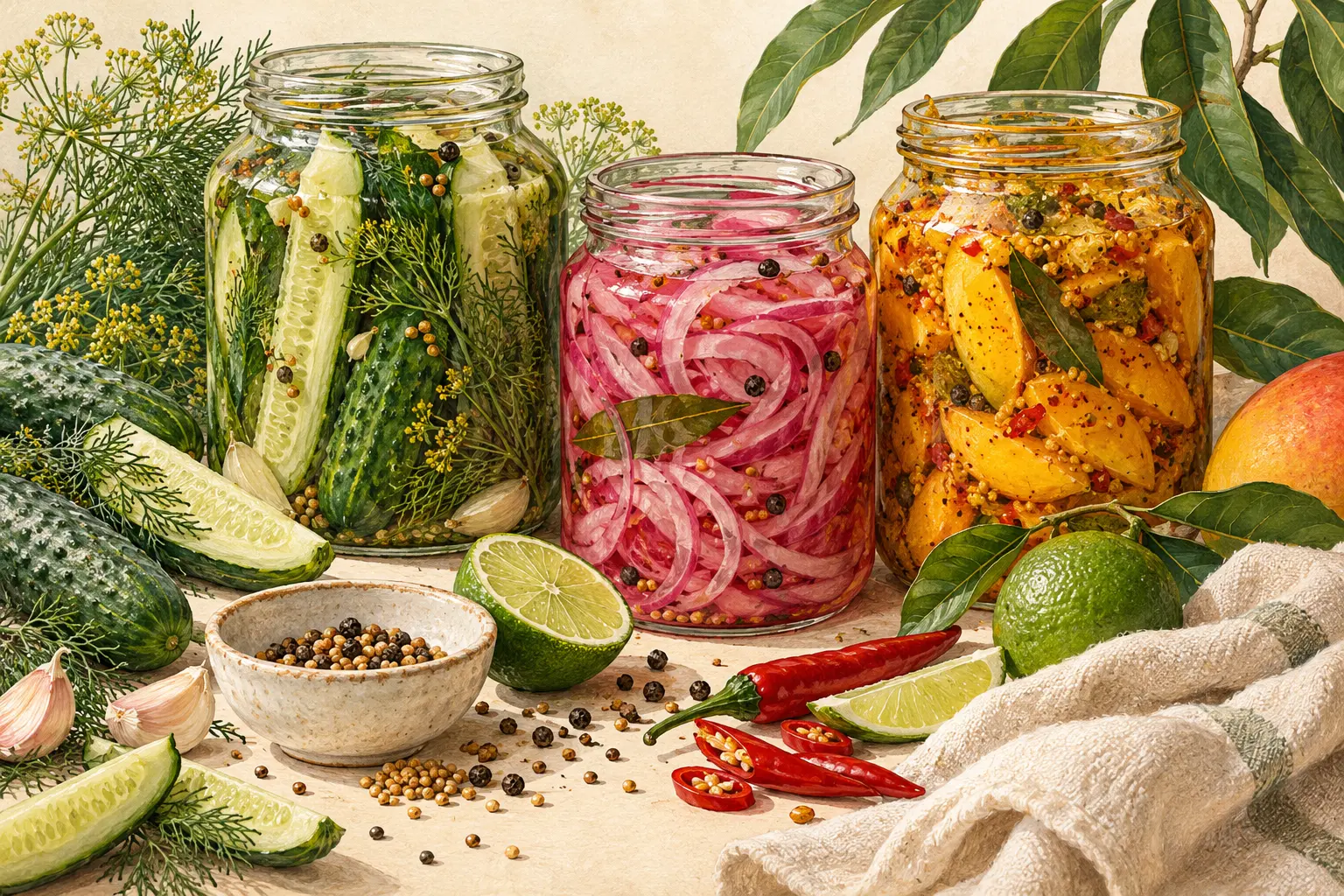
Illustration: original PickleRecipes pantry artwork. It is not a photograph of a tested batch.