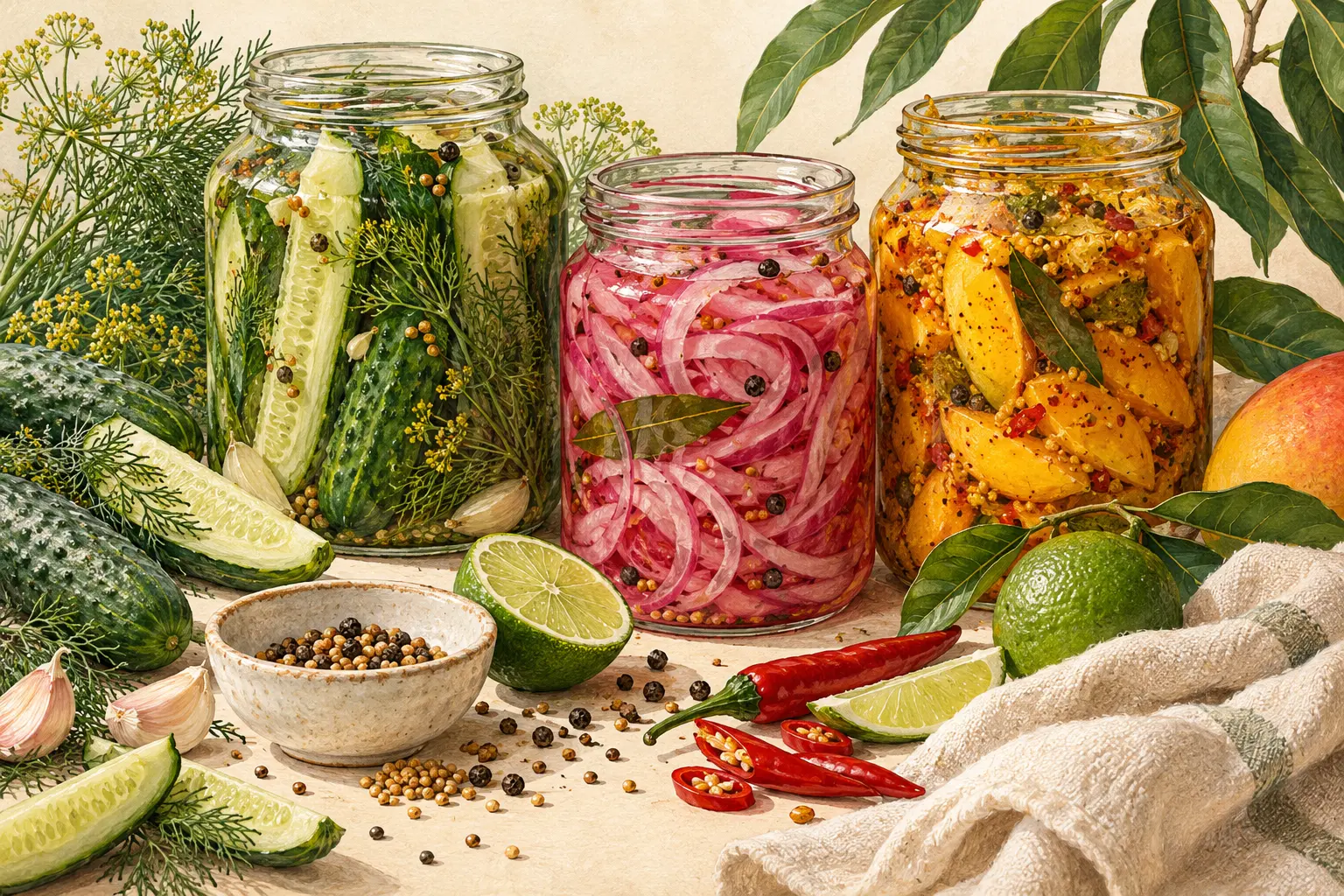
A good pickle project starts before the brine is made. Choosing sound produce and preparing the quantity the recipe actually asks for helps you avoid an oversized pack, uneven pieces and avoidable disappointment.
Select for the recipe
Choose the vegetable and variety specified by the recipe. A pickling cucumber, an edible pea pod and a pepper intended for slicing each have a particular job. Buy with the prepared quantity in mind, but allow for trimming losses. The weight of a whole bunch is not automatically the weight that will go into a jar.
Use sound produce
Minnesota Extension recommends fresh, high-quality produce and avoiding pieces with serious damage, cracks or bruising. Pickling is not a way to rescue rotting vegetables. Inspect produce before mixing it into a batch, and keep questionable items out of the preparation area. Soundness matters even when the pieces will later be chopped very small.
Wash before cutting
Rinse produce under running water before peeling or cutting and use clean equipment. Keep it separate from raw meat and contaminated boards. Prepare enough clean workspace to sort the sound pieces from discarded roots, cores and stems. A washed knife does not help if the next surface it touches is still dirty.
Read what the measure means
Two cups whole vegetables, two cups sliced vegetables and two cups tightly packed shreds are different quantities. Follow the form named in the recipe and measure after the specified preparation. Keep any optional trim separate until you know whether it belongs in the measured amount. Do not force extra vegetables into a brine because they are already cut.
Cut size belongs to the method
A thin matchstick and a large wedge behave differently in a jar. Minnesota Extension notes that cut size and pack style affect acidification. For a canning recipe, do not change these details casually. For a refrigerator recipe, follow its stated size so the preparation and intended texture remain meaningful; a larger piece is not automatically an equivalent substitution.
Make a useful batch note
Record the prepared quantity, cutting style and any noticeable produce differences. This helps explain why one batch fit into two jars and another left a remainder. Choose a smaller project when the available produce does not match the recipe. Starting another batch later is better than stretching today’s liquid over an unmeasured amount of food.
Source and scope
Consulted 28 October 2026: University of Minnesota Extension: Pickling produce. This guide is not a stand-alone preservation recipe or a way to certify an uncertain batch.
Continue with this related article, or browse the Recipe Library. Original pantry illustration by PickleRecipes; not a photograph of a tested batch.