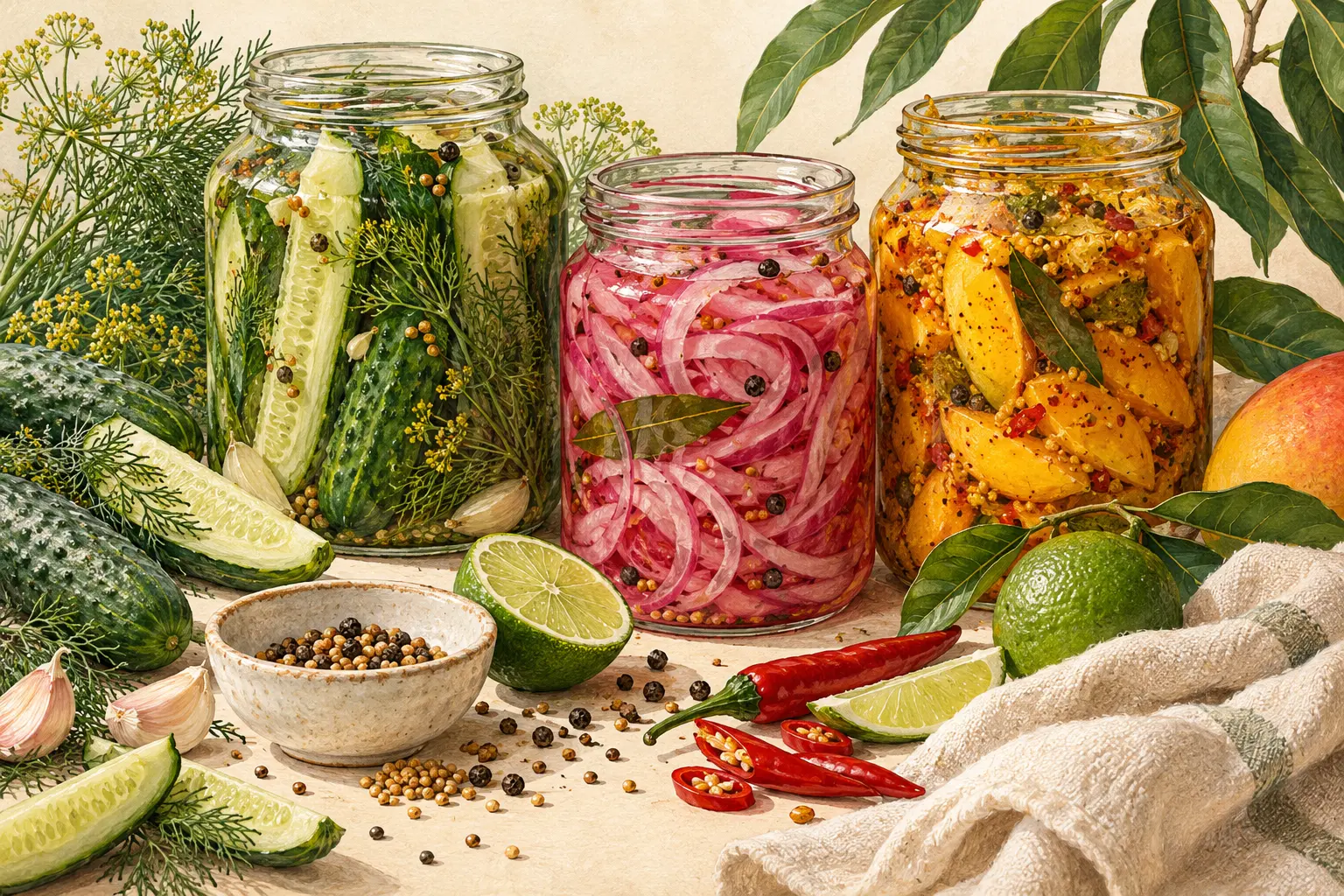
A cloudy jar or soft cucumber can have several causes. Troubleshooting is useful for improving the next batch, but it should never become a way to declare a questionable current batch safe without knowing its method and handling history.
Identify the product first
Write down whether the jar is a vinegar refrigerator pickle, a controlled ferment or a processed canned product. Find its original recipe and preparation date. Similar-looking changes can mean different things in different products, so a photograph or colour description alone is not enough to establish safety. Do not start by tasting it.
Cloudiness needs context
NCHFP lists salt additives among causes of sediment and discusses several other sources of appearance changes. That does not mean every cloudy jar is harmless. Check the salt used, water, spices and expected recipe appearance while also considering processing and storage. Never use an innocent possible explanation to dismiss mould, slime or uncertain handling.
Softness is a clue, not a verdict
NCHFP identifies weak vinegar, inadequate brine coverage, poor processing and cucumber blossom ends among possible contributors to soft pickles. These are troubleshooting categories, not a single diagnosis for your jar. If spoilage is evident, do not eat the product. Do not attempt to restore safety by adding crisping agents to a finished suspect batch.
Check equipment and ingredients
Record the vinegar acidity, salt product, spices, produce condition and container material. NCHFP warns against using pickles affected by unsuitable brass, copper or zinc equipment. When following a recipe, use the recommended food-safe materials and avoid improvising with a decorative pot or container whose composition you cannot identify.
Keep notes for the next batch
Separate the quality question from the safety decision. For example, uneven cuts or an overly long cook may help explain an unsatisfying texture in a correctly handled product. Note the exact step that differed and change only what the source allows next time. Do not change acid, salt or processing to chase a crisper texture.
When to stop troubleshooting
Discard a product when the source’s discard criteria apply or when safe handling cannot be established. Seek qualified preservation guidance for an uncertain canned or fermented batch. This article offers no rescue procedure. Its purpose is to help you collect useful facts and avoid repeating a mistake, not to override a recipe’s safety instructions.
Source and scope
Consulted 28 October 2026: NCHFP: Problems with Pickled Foods. This guide is not a stand-alone preservation recipe or a way to certify an uncertain batch.
Continue with this related article, or browse the Recipe Library. Original pantry illustration by PickleRecipes; not a photograph of a tested batch.