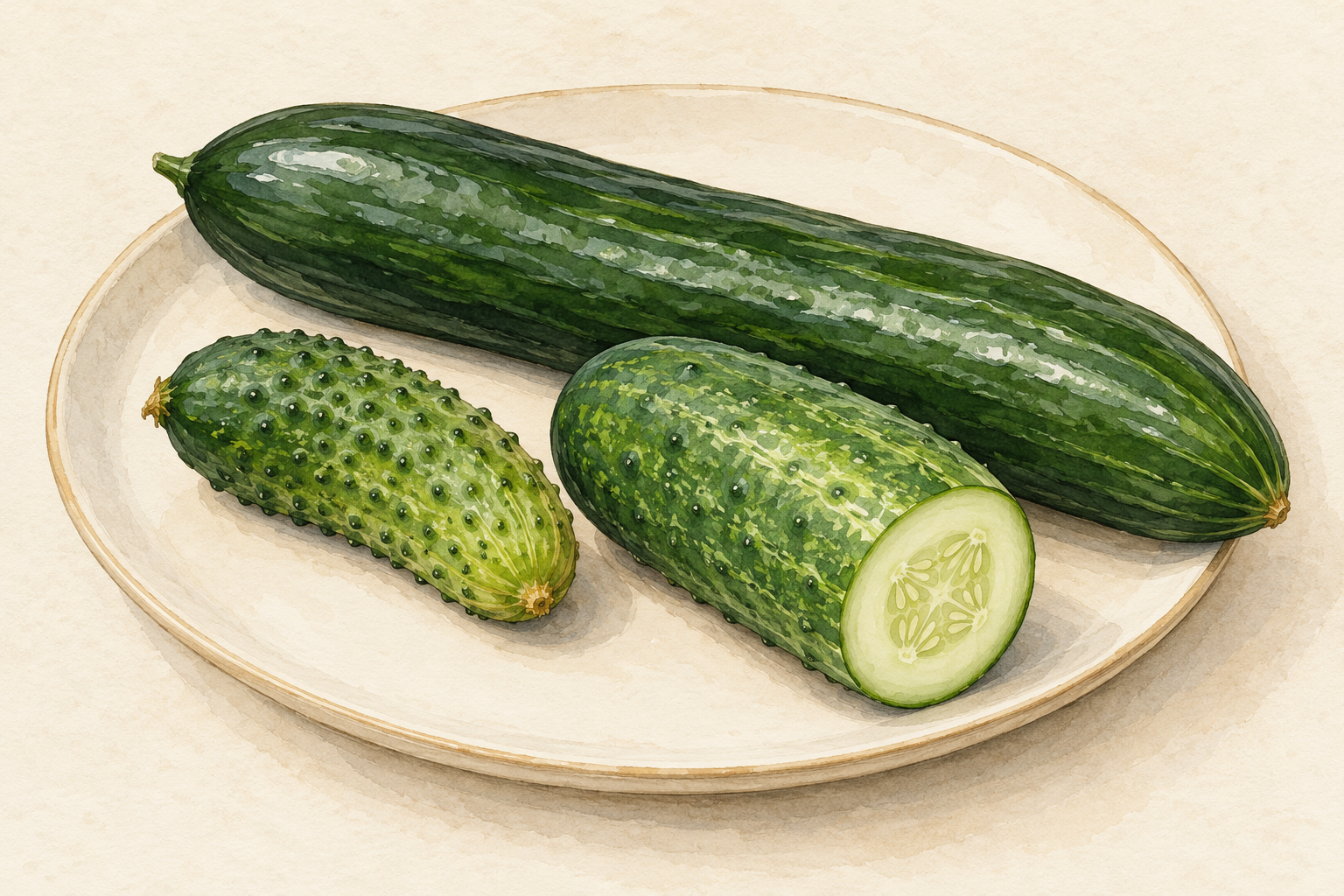
The cucumber that looks best in a salad is not always the one a pickle recipe expects. Size, seed development, surface treatment and how pieces fit into a jar all affect the result. Start with the cucumber type and preparation named by your recipe; use this guide to make a better shopping decision, not to override a tested formula.
What ‘pickling cucumber’ tells you
Pickling varieties are grown for pickling qualities and are commonly sold relatively small. Their shape makes it easier to sort a batch into similar sizes. Labels such as Kirby or gherkin are useful shopping clues, but a name alone does not tell you the exact cultivar, maturity or condition. Read the recipe’s size description and inspect the produce itself.
For whole pickles especially, consistent size matters: a small cucumber and a much larger mature cucumber are not equivalent pieces. Do not force a large slicing cucumber into a method written for small whole pickling cucumbers by simply increasing the processing time yourself.
English and garden cucumbers have different strengths
An English cucumber is usually long and sold for fresh eating. A garden slicing cucumber may be broader, with more developed seeds when mature. They can make useful ingredients in a refrigerator recipe that explicitly allows them, particularly when the recipe calls for a measured quantity of prepared slices. Their packing and finished texture can differ from small pickling cucumbers.
If a recipe asks for one cucumber without a size or prepared yield, that instruction is less reproducible than a measured amount. Do not assume one long cucumber replaces one small one. Prepare and measure exactly as the source directs, including any permitted peeling or seed removal.
Check freshness and surface treatment
- Choose firm cucumbers without mould, decay or soft damaged areas.
- Ask whether they are waxed when the surface treatment is unclear. Preservation guidance favours unwaxed cucumbers for pickling.
- Choose pieces of a similar size for a method that uses them whole.
- Plan your project promptly rather than buying a large bag before choosing a recipe.
Wash under running water and follow the recipe’s trimming instructions. NCHFP advises removing a thin slice, about 1/16 inch, from the blossom end of cucumbers for pickling because blossom-associated enzymes can contribute to softening. This quality step does not replace correct acid, salt, refrigeration or processing.
Match the cut to the recipe
Rounds, spears and whole cucumbers do not pack identically. A jar of loosely arranged spears can leave more space than close-packed rounds, changing how much produce fits. Do not solve a shortage of liquid by adding unmeasured water or increasing the vegetables beyond the formula. Use the recipe’s yield and container instructions, or choose another suitable recipe.
Before starting, write down three things: the cucumber description, whether the quantity is measured before or after trimming, and the specified cut. This short note prevents the common mistake of buying the right ingredient but preparing it in a different way.
Frequently asked questions
Can I use an English cucumber for refrigerator pickles?
Choose a refrigerator recipe that permits it and follow its prepared quantity and cut. Keep the finished food refrigerated according to that recipe. That permission should not be transferred to a different home-canning or fermentation method.
Are small cucumbers automatically safe for whole-pickle canning?
No. Their size may fit the recipe, but safety still depends on a tested method followed completely. A suitable vegetable cannot validate an improvised brine or processing time.
Sources and related reading
Reviewed 30 October 2026: Oregon State University Extension’s Pickling Vegetables and NCHFP’s General Information on Pickling. This is a produce-selection guide, not a stand-alone preservation recipe.
See our refrigerator cucumber recipe, general vegetable-selection guide and Recipe Library. The featured image is an original AI-assisted illustration; cucumber names cannot be reliably identified from artwork alone.