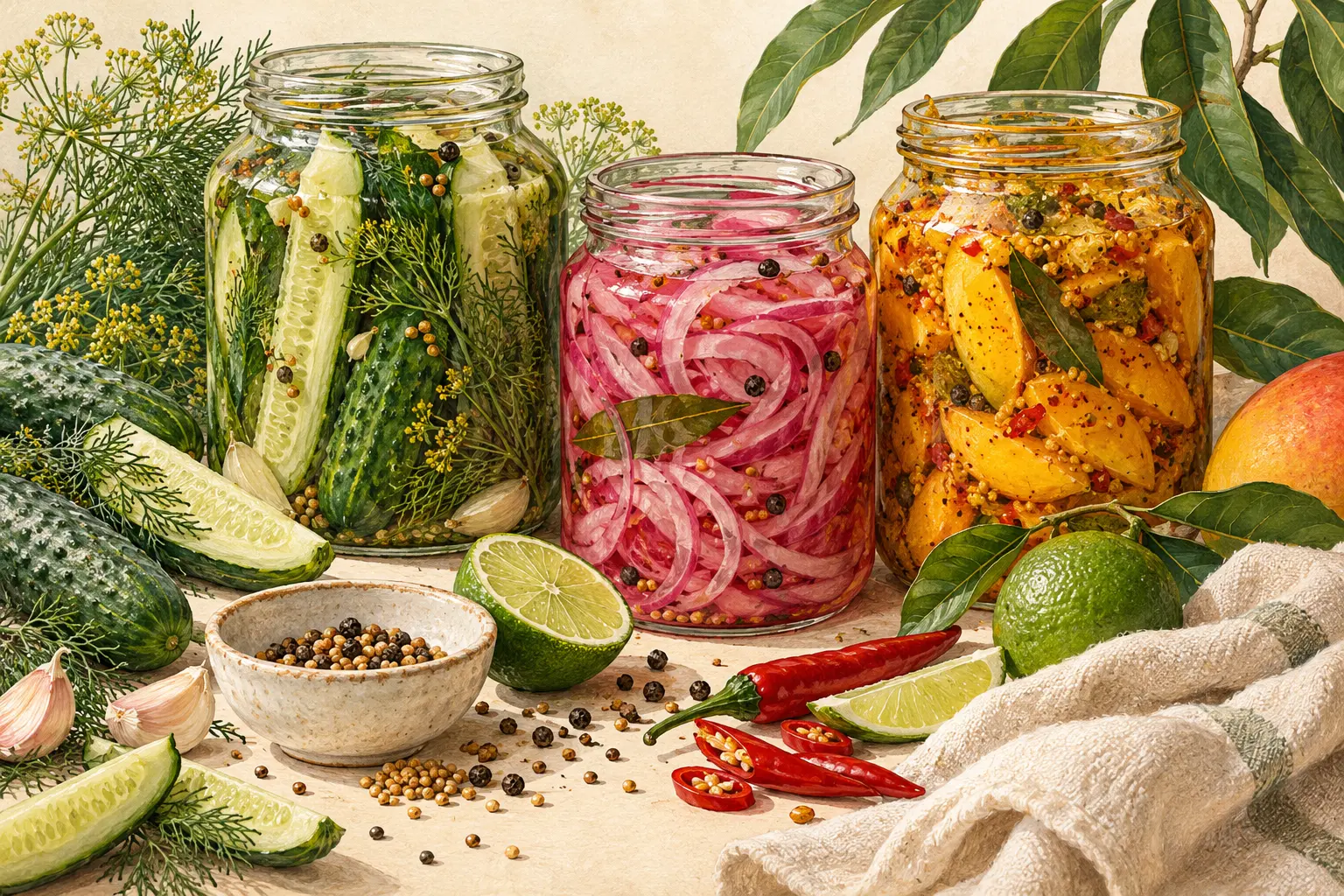
A jar of vegetables in a sour liquid does not tell you where it can be stored. Before choosing ingredients or jars, decide whether you are making a fresh refrigerated condiment, a controlled ferment or a product processed for pantry storage.
Start with the storage instruction
Read the complete recipe before shopping. Look for an explicit refrigeration requirement or a tested canning process with jar size, pack style, processing method and altitude adjustments. The words quick, instant and traditional are flavour or timing descriptions; they do not establish shelf stability. If the method is unclear, choose a different, fully specified recipe rather than filling in the missing preservation steps yourself.
What refrigeration changes
Refrigerator pickles stay cold from preparation through storage. They have not received the processing needed to make them suitable for the cupboard. A lid that pulls down as hot liquid cools is not evidence of a validated canning process. Use the particular recipe’s cold-storage directions, label the preparation date and return the jar to the fridge after taking a serving. Do not apply the storage time from a different vegetable or brine.
What a canning recipe must supply
Canning is a complete method, not a finishing flourish added to any pickle. The amount and strength of acid, food quantity, cut size, jar size and processing all belong together. A tested method should give the processing instructions needed for your location. This guide supplies no processing schedule: select one complete recipe from a preservation authority and follow it directly.
A useful choice for your first jar
For a small first project, choose a refrigerator recipe with a vegetable you already use and a serving plan for the next few meals. Our cucumber recipe states its measured brine and refrigeration requirement. Keep a note of your jar capacity and the date you started; that is more useful than making a large batch with an uncertain destination.
Questions to answer before starting
Can I keep this batch refrigerated throughout storage? Does the recipe specify the acidity of the vinegar? Do I have the right container and measuring equipment? If I want pantry storage, where is the tested processing schedule? Stop before preparation if any answer essential to the chosen method is missing. Replacing an incomplete recipe is easier than trying to establish the safety of a finished jar.
Where to go next
Browse refrigerator recipes for a meal-sized batch. For canned pickles, go directly to the National Center for Home Food Preservation recipe collection. Do not combine the ingredient list from a fresh achar with the processing time from a different canned vegetable. Treat the recipe and its preservation method as one unit.
Sources and scope
Consulted 28 October 2026: University of Minnesota Extension: Pickling produce. This is a method-selection guide, not a tested processing recipe. Follow a complete authoritative recipe for preservation.
For a practical refrigerated example, see this related pickle recipe. Browse the Recipe Library or read our approach to recipes and sources.
Illustration: original PickleRecipes pantry artwork. It is not a photograph of a tested batch.
1 thought on “Refrigerator Pickles vs Canned Pickles: Choose the Right Method”