A clean-looking jar is only one part of a safe pickling method. Washing a container, sterilizing an empty jar and processing a filled canning jar are separate tasks. Work out which tasks your selected recipe requires before putting water on the stove.
Inspect before washing
Choose a container appropriate to the method and inspect it in good light. A chipped rim, crack or damaged lid is a reason to choose another jar. For canning, use the recommended canning jars and compatible closures rather than assuming a reused commercial jar will behave the same way. Keep jars intended for fresh refrigerator use separate from your canning equipment.
Wash and rinse thoroughly
Wash jars and reusable equipment with hot water and detergent, then rinse well. Remove residue from the rim and threads and place clean equipment where it cannot be contaminated by raw food or dirty towels. NCHFP makes an important distinction: normal washing, including dishwasher washing, does not by itself sterilize a jar.
Read the empty-jar instructions in context
Whether a canning method requires presterilized jars depends on its complete processing procedure. NCHFP gives specific guidance for products processed for less than ten minutes and explains when presterilization is unnecessary. Do not turn that distinction into a reason to shorten a tested processing time. Use the original guidance, including its elevation adjustment, alongside the selected recipe.
A clean jar cannot validate a recipe
Putting an improvised pickle into a sterilized container does not make it shelf-stable. It also does not fix the wrong vinegar, an altered food-to-liquid proportion or missing processing. Start with a suitable recipe, then prepare the container as directed. If you cannot identify the actual preservation method, change the recipe before preparing a batch.
Set up a practical work area
Arrange the ingredients, measured liquids, utensils and containers before heating. Leave a clear landing area for hot equipment. Use tools intended to handle hot jars and keep children away from the filling area. Avoid sudden temperature changes in glass. Follow the lid manufacturer’s preparation instructions instead of automatically boiling every type of closure.
For a refrigerator project
Use a heatproof food container with a suitable lid and follow the refrigerator recipe’s sanitation directions. Plan enough space in the fridge before you start. Label the finished container with the recipe name and preparation date; a tidy label helps you follow the particular recipe’s storage instructions rather than guessing later. Pantry-storage instructions require a separate tested method.
Sources and scope
Consulted 28 October 2026: NCHFP: Recommended Jars and Lids. Also see the companion preservation guidance. This is a method-selection guide, not a tested processing recipe. Follow a complete authoritative recipe for preservation.
For a practical refrigerated example, see this related pickle recipe. Browse the Recipe Library or read our approach to recipes and sources.
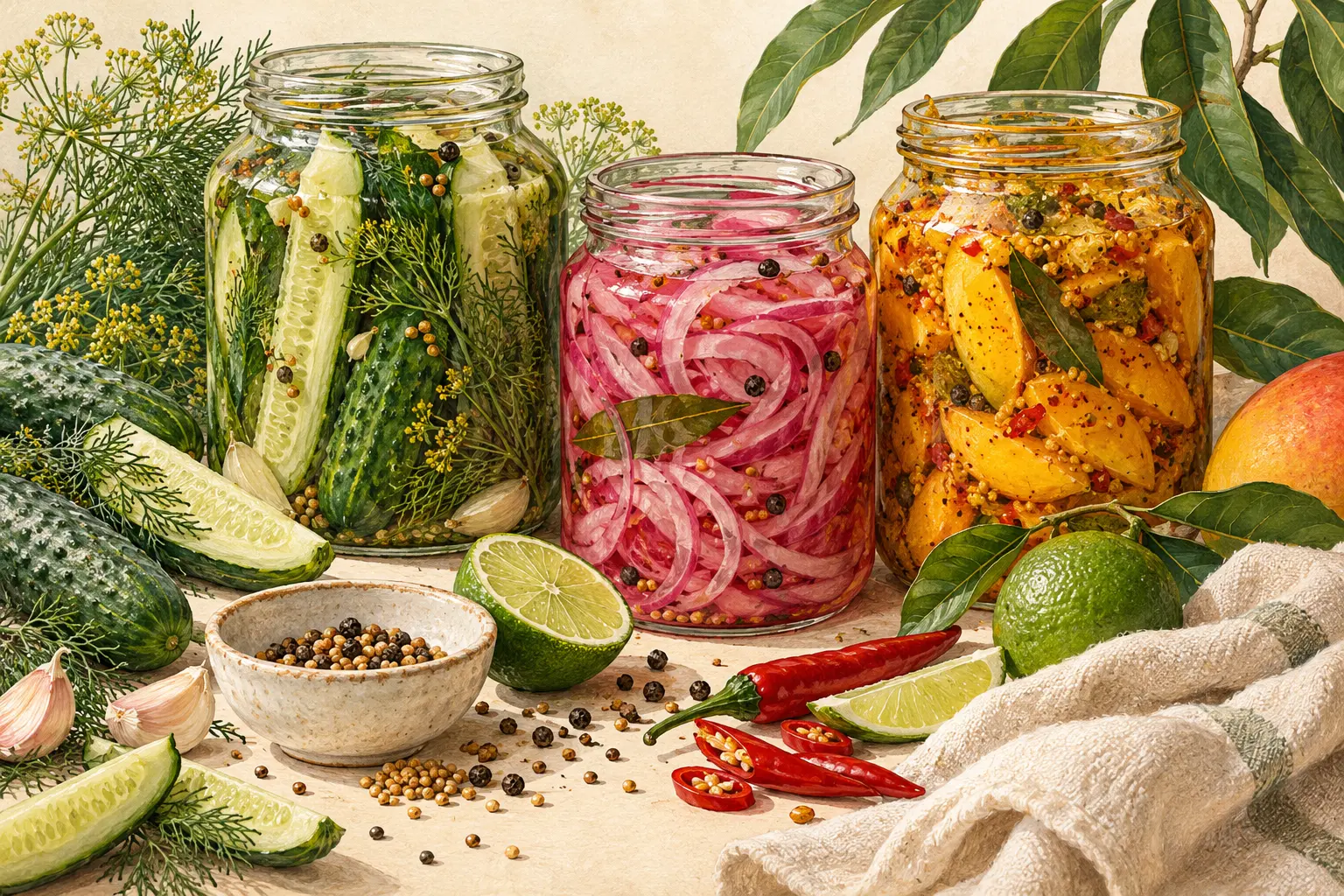
Illustration: original PickleRecipes pantry artwork. It is not a photograph of a tested batch.
1 thought on “Cleaning Pickle Jars: Washing, Sterilizing and Processing Are Different”