Salt labels can make a simple ingredient confusing. A recipe may specify fine pickling salt, table salt or a measured weight, and those instructions should be read before you open whichever tub is already in the cupboard.
What to buy
For a recipe that calls for canning or pickling salt, buy that product and keep its label with your batch notes. NCHFP recommends it for predictable use and explains that anti-caking additives in other salts can cloud brine. A clear jar is a quality preference, however, not a stand-alone safety test.
A spoon is a volume measurement
Coarse crystals and fine grains do not fill a spoon in the same way. Do not replace a tablespoon of one salt with a tablespoon of another simply because both taste salty. If a recipe gives grams, use an appropriate scale. If it gives a particular product and volume, follow that instruction rather than applying a conversion remembered from another recipe.
Keep fermentation instructions intact
Salt in a vegetable ferment helps establish the intended microbial environment. It is not merely a garnish that can be reduced at will. NCHFP cautions against reduced-sodium salt in fermented pickle recipes. If you need less sodium, look for a recipe developed for that requirement instead of rewriting a fermentation formula.
Read low-sodium recipes carefully
A quick vinegar pickle and a ferment have different requirements. Do not transfer a salt substitution allowed in one method into the other. Read the original source and its notes, including whether a substitution affects taste or texture. This guide gives no universal minimum salt percentage and supplies no independent fermentation method.
A practical measuring setup
Put the salt container, measuring tool and written recipe together before preparation. Level a volume measure rather than using a heaped eating spoon. Keep wet utensils out of the salt supply. Record what you used, including the unit; a note saying one spoon is not enough to reproduce a batch or investigate a mistake.
When you notice a mistake
Pause before adding more food or liquid. Identify the exact recipe, salt type and amount already added. Do not try to judge an uncertain preserving mixture by tasting it. For a ferment or canned product, ask a qualified preservation service about the specific situation. For your next small refrigerator project, measure all ingredients before starting the heat.
Source and scope
Consulted 28 October 2026: NCHFP: Salts Used in Pickling. This guide is not a stand-alone preservation recipe or a way to certify an uncertain batch.
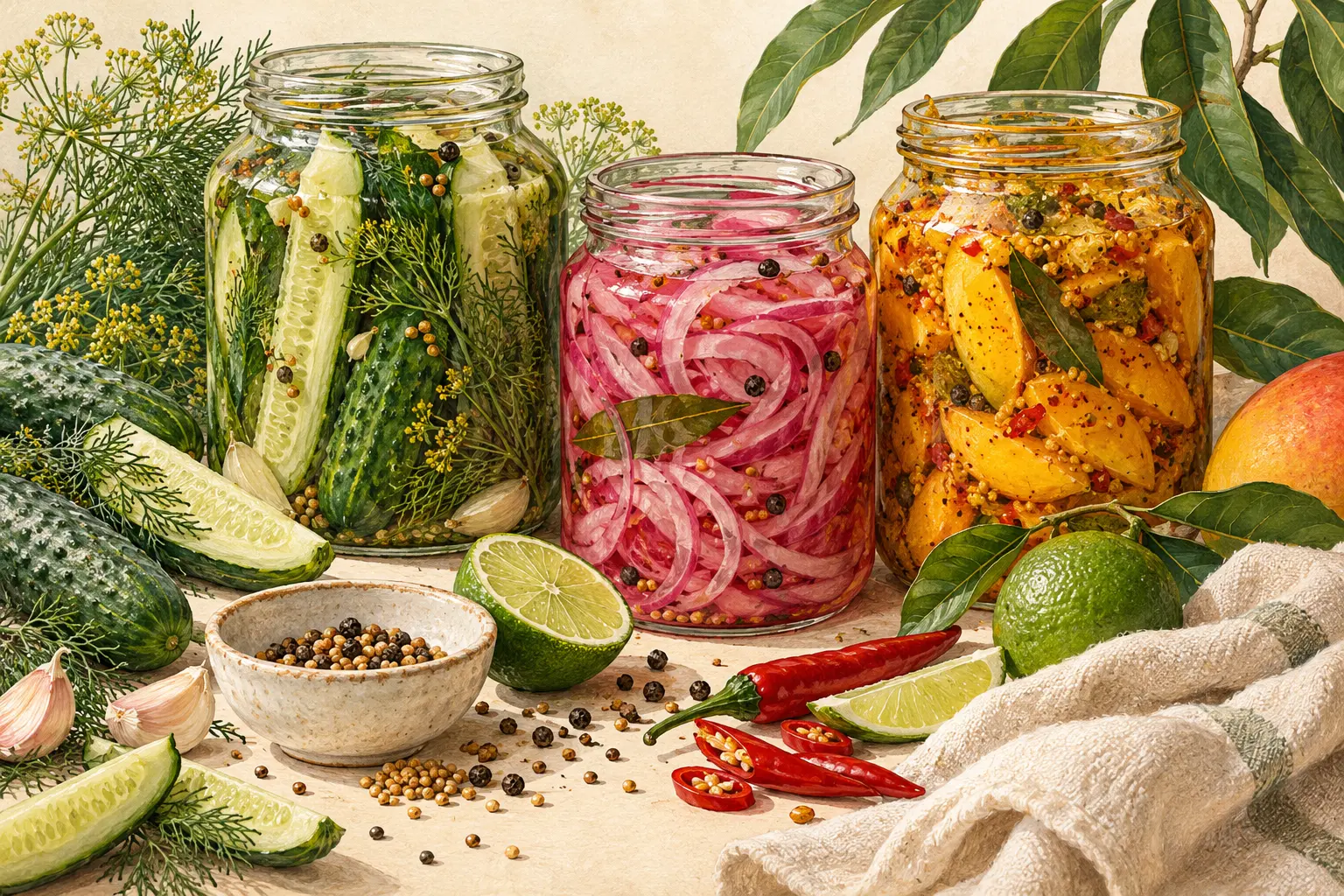
Continue with this related article, or browse the Recipe Library. Original pantry illustration by PickleRecipes; not a photograph of a tested batch.
2 thoughts on “Salt for Pickling: Match the Type and Measurement”