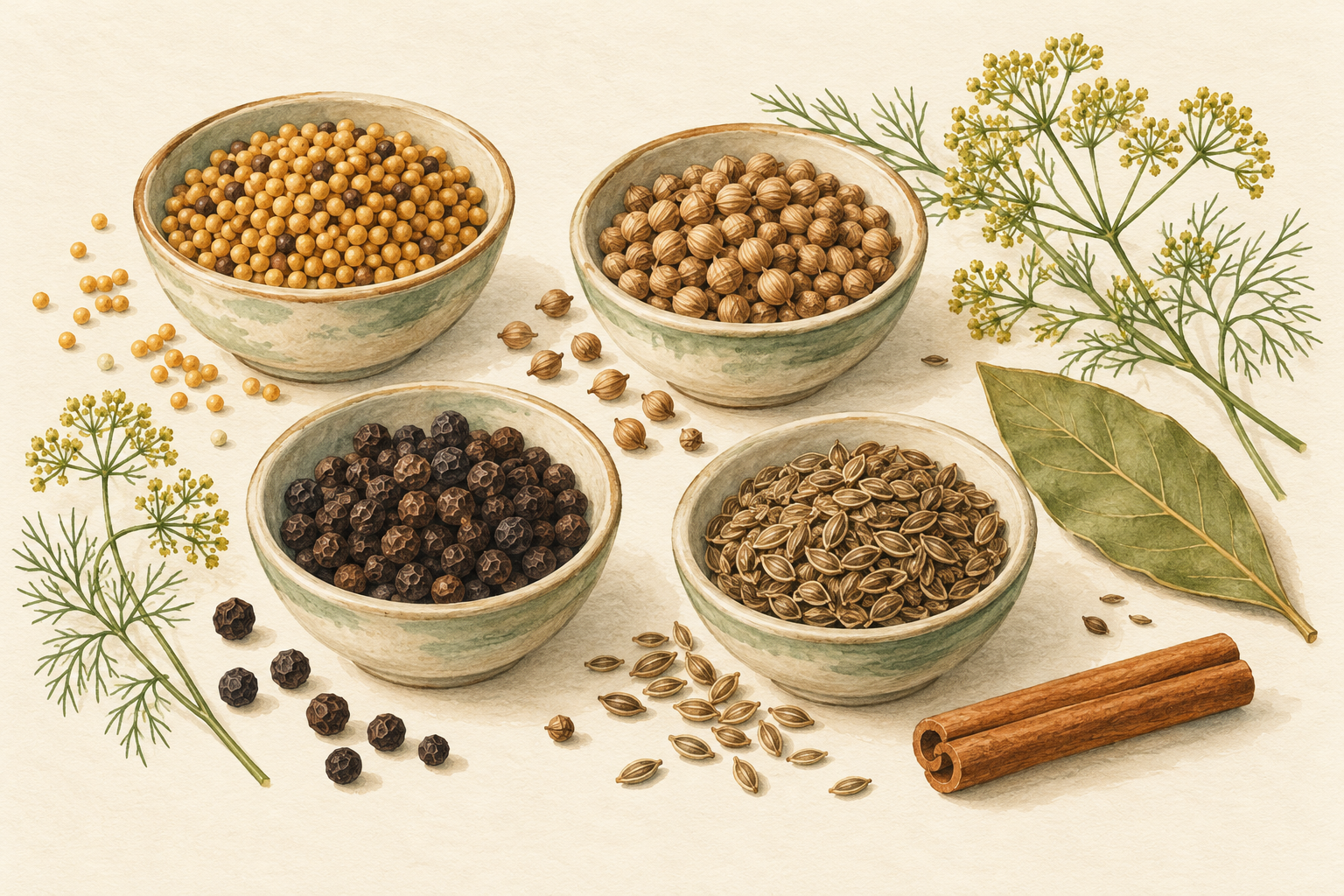
Pickling spice is a mixture chosen for aroma and flavour, not a universal preservation formula. One packet may lean towards pepper and mustard; another may contain warm spices such as cinnamon or cloves. The most useful question is not which blend is strongest, but whether its ingredients and form suit the recipe you intend to make.
Pickling spice and pickling salt are different
Pickling salt is an ingredient measured according to a recipe. Pickling spice is a seasoning blend that may contain several plant ingredients. Neither is a substitute for the other. A commercial pickle mix may also contain salt or other functional ingredients, so read the whole label rather than treating every product with ‘pickle’ in its name as a bag of spices.
Keep that distinction visible in your shopping list: write the exact salt or mix named by the recipe, and list any separate spices beneath it. Do not use an ordinary spice blend in place of a commercial mix on which a recipe’s directions depend.
Recognise the main flavour families
- Mustard seeds bring a characteristic mustard note; yellow and brown varieties are not identical.
- Coriander seeds add a rounded, citrus-like aroma when used as directed.
- Peppercorns and dried chilli contribute different kinds of heat.
- Dill seed gives a different result from fresh dill leaves or flowering dill heads.
- Cinnamon, cloves, allspice and bay can make a mixture feel warmer and more aromatic.
These are examples, not a required ingredient list. Check the packet for the actual contents, allergens and any salt or additives. A blend containing a flavour you dislike may be less useful than the separate spices already named in your chosen recipe.
Whole spices are not interchangeable with powders
Whole spices generally suit a clear pickling liquid better than powders, which can darken or cloud the mixture. A spoonful of ground spice is also not equivalent in flavour to the same spoonful of whole seeds. Follow the recipe’s form and quantity; do not invent a volume conversion between them.
How a spice is used matters too. Some recipes place measured spices directly in jars; others call for an infusion or a removable spice bag. Follow that sequence. Removing a bag later is not a safety fix for an incorrect recipe.
Choose a blend in four steps
- Read the complete recipe and note whether it names individual spices, a particular mix or an optional blend.
- Compare the ingredient label with those instructions, including any salt or functional ingredients.
- Choose a quantity you can use while its aroma is still good, and store it tightly closed in a cool, dry location away from steam.
- Record the brand or exact permitted option in your batch notes so you can repeat a flavour you enjoy.
If a recipe offers seasoning variations, use those stated options. Do not change the vinegar, water, produce balance or fermentation salt to compensate for a stronger or weaker spice flavour. Seasoning cannot establish safe acidity or replace a tested preservation method.
Frequently asked questions
Can I make a blend from my spice cupboard?
You can assemble a culinary seasoning from sound ingredients, but whether it belongs in a particular preserve depends on that recipe’s permitted variations. For a first batch, using the specified individual spices makes the result easier to understand and repeat. This article deliberately gives no universal blend dosage for canning.
Does cloudy liquid mean the spices caused the problem?
Not necessarily. Several ingredients and spoilage processes can affect appearance. Do not diagnose an uncertain jar by blaming the seasoning or tasting the food. Check the method and handling with a reliable preservation source.
Sources and related reading
Reviewed 30 October 2026: Oregon State University Extension’s Pickle Fact Sheet and University of Minnesota Extension’s pickling guidance. No home-canning formula is supplied here.
Read how to choose and measure pickling salt and how to approach cloudy or discoloured pickles, then browse the Recipe Library. Featured artwork is an original AI-assisted ingredient illustration, not a photographed test batch.