A little liquid left in the saucepan and the liquid left after eating a jar of pickles are not the same thing. Keep that distinction clear before deciding what to do with a remainder. Saving a few spoonfuls is never a reason to compromise the next batch.
Has the liquid touched food?
Minnesota Extension distinguishes unused prepared pickling liquid from brine that has already held vegetables. During pickling, produce and liquid exchange water and acid. The used liquid therefore cannot be assumed to have the same preserving ability as the original measured mixture. Do not pour it over fresh vegetables and assign the next jar the original recipe’s storage life.
Why topping up is not a reliable reset
Adding a splash of fresh vinegar, salt or boiling water does not reconstruct an unknown used mixture. You do not know the final acid balance throughout the old liquid or the new food. Boiling also does not supply a tested canning procedure. For a new preserved batch, make fresh brine according to the selected recipe rather than inventing a correction.
Plan the amount before preparation
Check the recipe yield, container size and prepared vegetable quantity. Arrange a spare clean container in case the packing differs from the estimate. Do not dilute the brine to stretch it over a larger amount of produce. If the recipe provides an approved scaling method, use it; otherwise choose a batch size that fits its stated quantities.
Handle an unused remainder deliberately
Liquid that has never touched produce is a different case, but do not treat it as indefinitely reusable. Follow source guidance for its handling and storage and keep it clearly labelled. If you have no specific storage instruction, make only what you need instead of accumulating an unidentified bottle in the fridge. Discard a remainder whose history is uncertain.
Keep serving utensils out of storage questions
Do not return liquid from a serving bowl to the main jar. A spoon that has touched a plate can introduce contamination, so use a separate clean utensil to portion the pickle. Store the main jar according to its own recipe and date; moving food into another container does not restart its storage period.
A simple decision at the sink
If the liquid held vegetables, do not use it to preserve the next batch. If it is unused, identify the original recipe and its handling guidance before retaining it. If you cannot establish its history, discard it. When preparing the next jar, measuring a fresh batch gives you a clear starting point and a useful record of what actually went in.
Sources and scope
Consulted 28 October 2026: University of Minnesota Extension: Pickling produce. Also see the companion preservation guidance. This is a method-selection guide, not a tested processing recipe. Follow a complete authoritative recipe for preservation.
For a practical refrigerated example, see this related pickle recipe. Browse the Recipe Library or read our approach to recipes and sources.
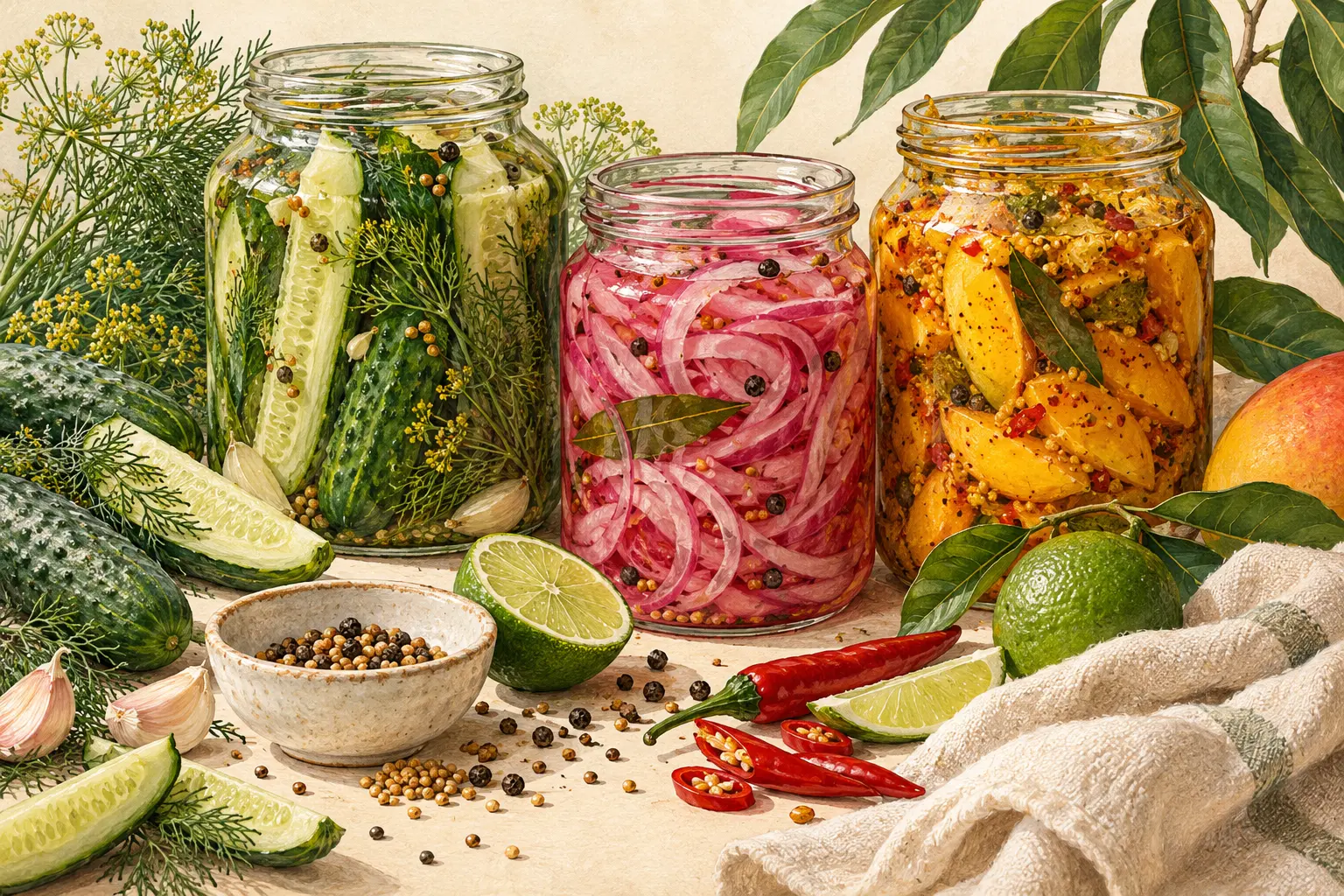
Illustration: original PickleRecipes pantry artwork. It is not a photograph of a tested batch.