Fermentation and vinegar pickling both produce sour foods, but they reach that result differently. Choosing between them changes the ingredient rules, equipment and monitoring. A jar that unexpectedly bubbles is not automatically a successful ferment.
Identify the intended process
Vinegar pickles use an added acidic ingredient. A vegetable ferment relies on a controlled process in which microorganisms produce acid. Some published ferment recipes also include a small measured amount of vinegar, so ingredient names alone are not enough to classify a recipe. Read its complete method, expected conditions and storage directions.
Salt is not an interchangeable seasoning
In a controlled vegetable ferment, the salt amount is part of the intended environment. NCHFP cautions against reducing salt in fermented sauerkraut or brined pickles. Do not take a low-salt refrigerator recipe and leave it on the counter, or apply a general online percentage to a different fermentation recipe without knowing its measurement convention and process.
Choose a project you can monitor
A ferment needs an appropriate food-safe container and the controls specified by its tested recipe. Before starting, check whether your room can maintain its required temperature and whether you can inspect the batch as directed. If your kitchen is hotter than the method allows, choose a refrigerated vinegar pickle instead of assuming faster fermentation will be equivalent.
Keep recipe instructions together
Use one research-tested fermentation recipe from a preservation authority. Retain its vegetable quantity, salt, liquid, temperature range and monitoring instructions as a complete set. Do not mix a blogger’s seasoning variation with another source’s timings and a third source’s storage claim. This comparison guide deliberately gives no stand-alone fermentation formula.
Unexpected fermentation is a warning to investigate
A refrigerator vinegar pickle is not intended to become an active counter ferment. Unexpected gas, slime or a disagreeable odour is not proof that beneficial organisms have taken over. Follow the recipe’s discard guidance and do not taste a questionable batch to decide whether it is safe. Food-safety assessment requires more than appearance.
Make the choice before cutting vegetables
Choose fermentation when you have a complete tested method and can maintain its conditions. Choose a refrigerator vinegar recipe when you want a smaller cold-stored condiment and can follow its instructions. Neither choice automatically supplies a pantry-storage process. Use the specific storage directions that belong to your recipe after preparation is complete.
Sources and scope
Consulted 28 October 2026: NCHFP: General Information on Fermenting. Also see the companion preservation guidance. This is a method-selection guide, not a tested processing recipe. Follow a complete authoritative recipe for preservation.
For a practical refrigerated example, see this related pickle recipe. Browse the Recipe Library or read our approach to recipes and sources.
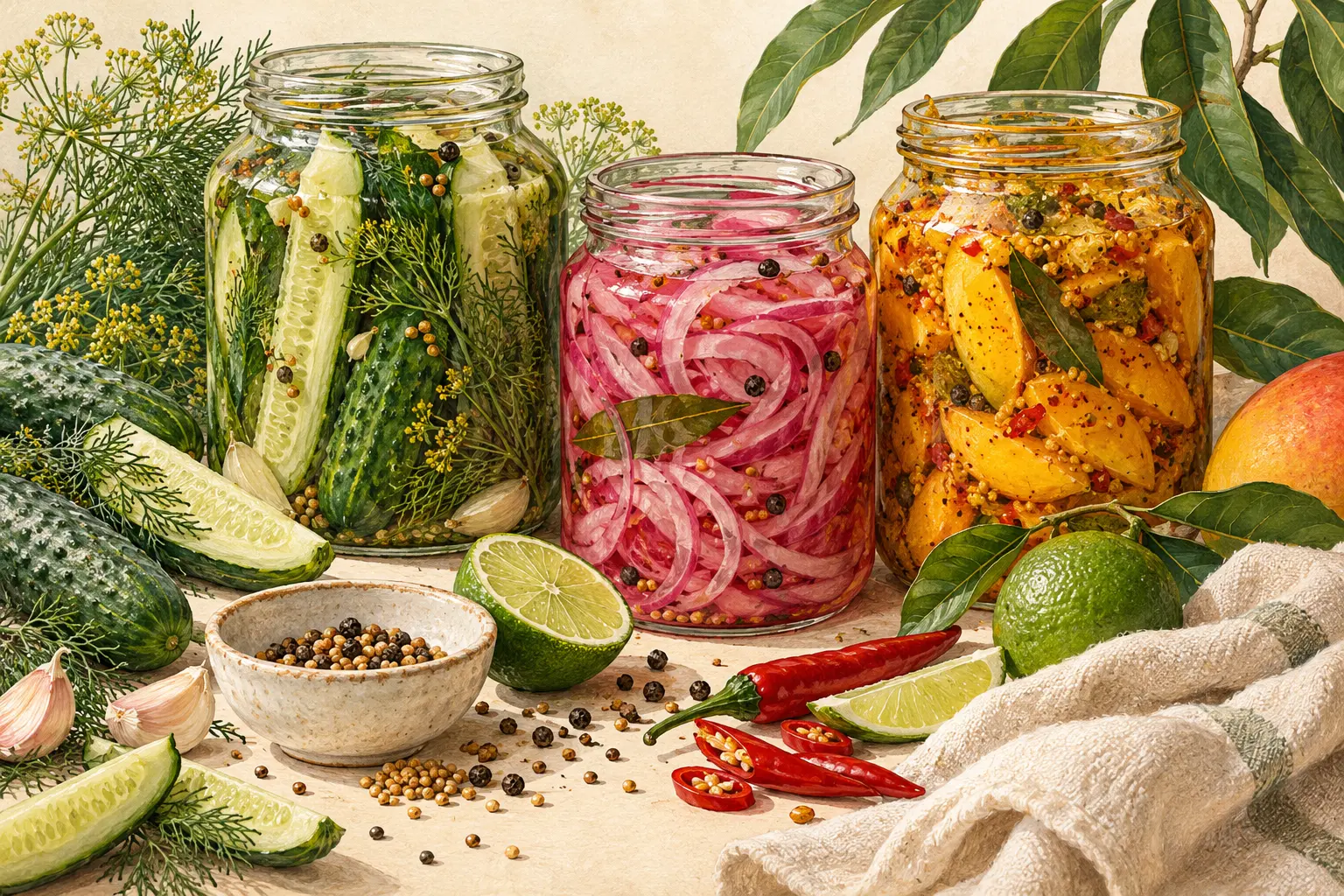
Illustration: original PickleRecipes pantry artwork. It is not a photograph of a tested batch.