Refrigerator pickles need an actual cold-storage plan, not just space somewhere near the fridge. Think about preparation, serving and travel as well as the time a closed jar spends on a shelf.
Check the temperature
FDA recommends keeping the refrigerator at 40°F / 4°C or below and using an appliance thermometer to check it. A dial setting is not the same as a measured temperature. Put the thermometer where its instructions recommend and check it as part of your normal food routine, especially if the fridge is crowded or behaving unusually.
Plan cooling before preparation
Clear space before starting a batch. Use suitable heatproof containers and follow the recipe’s filling instructions. Do not leave a large warm batch on the counter for hours waiting for every part to feel cold. FDA advises prompt refrigeration and smaller containers to help hot leftovers cool more quickly. That general advice does not create a canning process.
Serve a portion
Take out a small serving with a clean utensil and return the main container to cold storage. Do not put leftovers from the table back into the jar. If several people are eating, a separate serving dish makes portioning easier and keeps repeated handling away from the stored batch. Label the original preparation date rather than resetting it after each meal.
Treat travel as cold storage
A jar in a lunch bag, car or picnic basket is not refrigerated merely because it started cold. Plan an insulated container and adequate cold packs, and keep the food cold until it is served. If you cannot maintain the required temperature, choose a different accompaniment rather than relying on vinegar flavour to protect a refrigerated pickle.
Know the general time limit
FDA gives a two-hour limit for perishable food out of refrigeration, reduced to one hour when air temperature exceeds 90°F / 32°C. This is an outer handling limit, not an instruction to leave every batch out that long. Follow a stricter recipe instruction if one applies and include preparation and serving time when considering exposure.
When the history is uncertain
A pleasant smell cannot reconstruct a temperature history. If you cannot establish whether a batch stayed cold, do not taste it to decide. Seek case-specific food-safety advice or discard it. A dated label, working thermometer and simple serving routine reduce the chance of reaching that uncertain situation in the first place.
Source and scope
Consulted 28 October 2026: FDA: Refrigerator Thermometers—Cold Facts about Food Safety. This guide is not a stand-alone preservation recipe or a way to certify an uncertain batch.
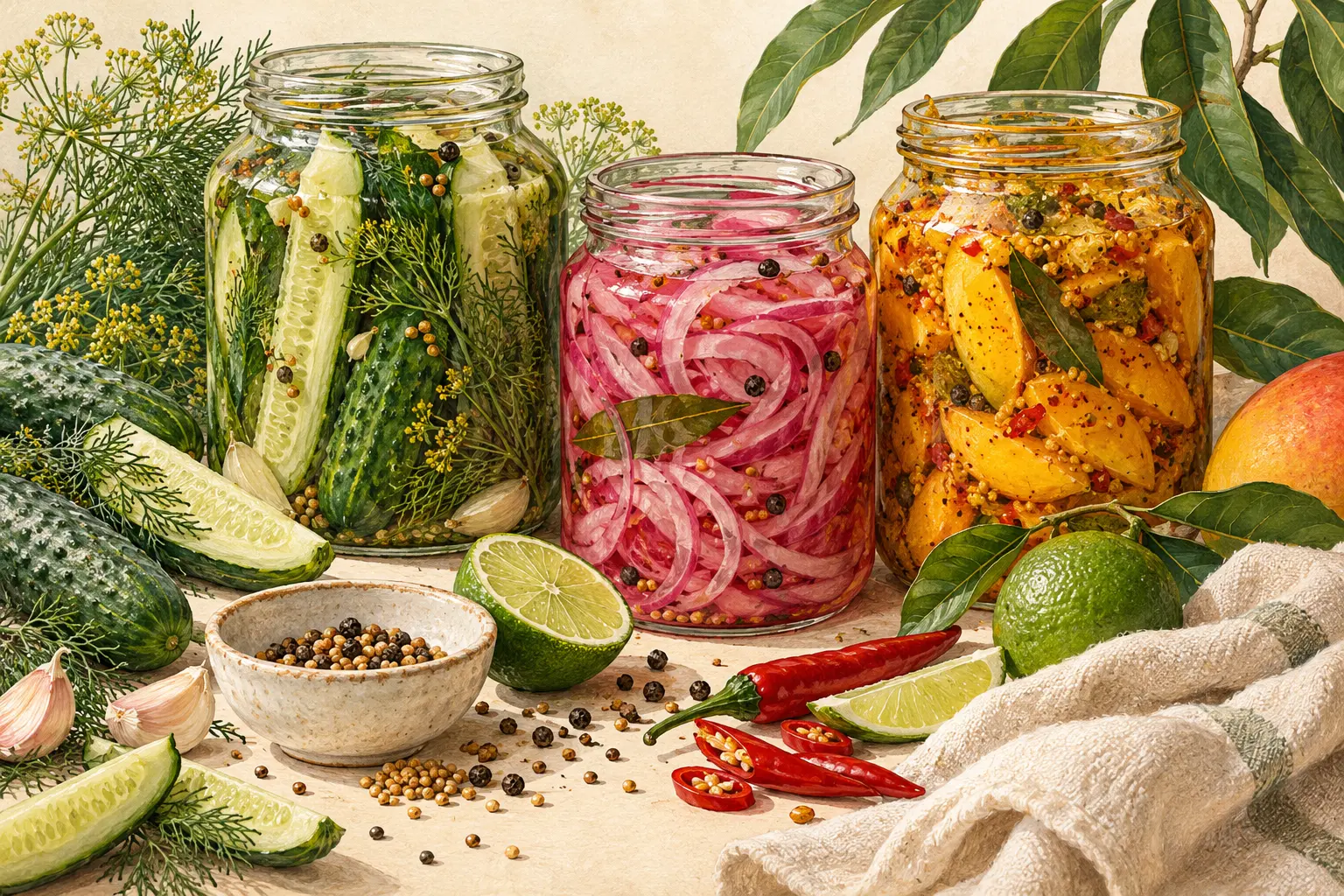
Continue with this related article, or browse the Recipe Library. Original pantry illustration by PickleRecipes; not a photograph of a tested batch.
1 thought on “Keeping Refrigerator Pickles Cold: Thermometers, Serving and Transport”